Tuned to their history
Effects are estimated from the medicines, conditions, allergies, and recent reports the family has already added — not from a generic chart.
Food Lens
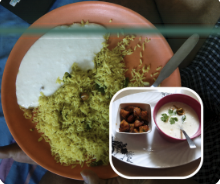
The plate of lemon rice and curd looks the same on every table. What it does, though, depends on the person eating it — their sugar levels, their medicines, last week's report. Point the camera at the food and Nityaayu reads it in that person's context, so the family can make a slightly kinder choice at the very next meal.
Possible effects, using Amma's own health context.
The moment it helps
"Amma's sugar had been creeping up, but nobody wanted to police her dinner. Now we just check the plate together — and most nights we add a katori of dal instead of taking anything away."
Son cooking with his mother · Hyderabad
What Food Lens reads
The same meal earns a different note for a diabetic father and a recovering daughter. That difference is the whole point.
Effects are estimated from the medicines, conditions, allergies, and recent reports the family has already added — not from a generic chart.
Low, moderate, or worth-watching — shown as a calm nudge for the next choice, never a scolding about the one already on the plate.
If a dish brushes against a known allergy or a food-medicine caution, that shows up first — clearly, and without drama.
The suggestion is always forward-looking: a small add, a swap, a portion note — something the household can actually do tomorrow.
How it works
STEP 01
Snap the plate as it is being served. No weighing, no logging, no typing out ingredients.
STEP 02
The dish is matched against that person's medicines, conditions, and recent reports — privately, for them alone.
STEP 03
A possible-effects card and a single, doable idea for the next meal — to keep or to ignore.
Common questions
No. It is not a calorie tracker. It estimates likely effects for a specific person — a softer, more useful signal than a number that ignores their health entirely.
It does its best with what it can see and stays honest when it is unsure. A shared thali still earns a sensible, cautious read rather than false precision.
Meal photos are tied to that person's private context and handled with the same care as the rest of their records. You stay in control of what is kept.
Keep reading
Turn the same health context into a weekly plan and recipes the household will actually cook.
Medicines, refills, reports, and follow-ups for parents, held together in one calm place.
The plain-language report summaries that give Food Lens the context it reads from.
Current medicines and conditions, kept up to date — the backbone Food Lens leans on.
The family vault of reports and history that makes a contextual read possible.
Where AI helps, where it deliberately stops, and how health information is handled.
Join early access and tell us whose plate you would point the camera at first.